
"arabica harvest"
7000 article(s) found

What varieties of arabica have evolved? KFC Arabica coffee beans refer to...
Professional coffee knowledge exchange More coffee bean information Please pay attention to coffee workshop (Weixin Official Accounts cafe_style) Arabica coffee varieties This information is not easy to be noticed by coffee users in the early stage, often engaged in roasting operators or players will be slightly concerned, but will not be overly deep, persistent, because the former is concerned about price and sales channels; the latter

Introduction to the price of Arabica coffee beans during the harvest season
Arabica is deeply loved by Chinese people with a short history of coffee contact because of its strong fruity aroma. it was introduced to China by missionaries in the 19th century and was widely planted in Panzhihua, Sichuan, and the dry-hot valley of the Jinsha River in western Yunnan, where the sunshine was long and there was a big temperature difference between day and night. The local people solved the problem of insufficient seasonal rainfall by diverting water up the mountain.

A brief introduction to Brazilian Coffee
Coffee varieties: both Arabica and Robusta are raw and manufactured, of which Arabica accounts for 70% to 80%. Among Arabica coffee varieties, there are Modo Novo, Catuai, Bourbon, Maragoripe and so on. Coffee harvest can usher in three or four harvest seasons in a year, and mechanical picking is extremely widespread. The path of picking is very different from that of other masterpieces. Mechanical picking

Harvesting and processing of coffee
Coffee is the fruit of a Rubiaceae plant growing about 6000 feet above sea level, distributed on the world's narrow subtropical axis; coffee trees grow green all the year round and can grow up to 20 feet tall, and are generally controlled at 8 to 10 feet for easy harvest.

Flavor description of Arabica coffee beans in Latin America introduction to the regional treatment of manor production
Flavor description of Arabica coffee beans in Latin America the planting of coffee trees is only the first step in coffee production. When the coffee fruits are ripe, they can be harvested through picking equipment. Two seeds (Arabica coffee beans) are then extracted from each berry. The last step is to roast coffee beans for consumption. This removes moisture and changes coffee.

Arabica Coffee Bean Picking Chart Features Price Origin Flavor Description Taste Treatment Introduction
Arabica coffee beans picking map characteristics price origin flavor description taste processing method introduction 1. Mechanical picking Mechanical picking is suitable for coffee plantations with flat land and large areas of cultivation. Afterwards, it is necessary to check the coffee beans picked by the machine and pick out the leaves and branches dropped in the funnel. Brazil often uses this method. Advantages: Low cost and high efficiency Disadvantages: Automated machine harvesting will harvest

Introduction of Arabica Coffee Bean picking Map characteristics, Price, Origin Flavor description, taste treatment method
Arabica coffee bean picking map characteristics price producing area flavor description taste treatment method. Mechanical picking is suitable for coffee gardens with flat land and large areas of plantation. afterwards, it is necessary to check the coffee beans picked by the machine and pick out the leaves and branches that have fallen in the funnel. This method is often used in Brazil. Advantages: low cost, high efficiency, disadvantages: automated machine harvesting will harvest

Is Sumatran coffee the best coffee in Indonesia? is Sumatran coffee Arabica?
For more information on coffee beans, please pay attention to the harvest in the coffee workshop (official Wechat account cafe_style) and how to handle it: whether on sharecroppers or on medium-sized estates, all Arabica coffee is picked by hand in Indonesia. Because coffee cherries are all immature at the same time, farmers harvest every 10 days for five to six months. And they only pick.

Robusta Coffee picking time-how to drink Coffee Powder Flavor description Grinding scale Manor introduction
Robusta Coffee picking season-how do coffee powder drink flavor description Grinding scale Manor introduction most Arabica coffee beans mature from June to August, Robasta coffee beans are from September to October. Therefore, although in some countries where the dry and wet seasons are not obvious, such as Colombia and Kenya, there are two flowering periods a year, that is, two harvests, but strictly speaking, there is only one harvest a year.
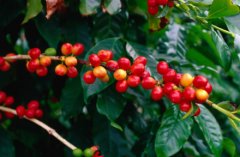
Coffee harvest time of coffee beans in the main producing areas of the world
Regional harvest period Brazil from May to late June Colombia from October to late February of the second year, China and the United States, from October to late February of the second year, mocha, from early October to late January of the second year, Africa Robsta, from early October to late January of the second year, Arabica, Africa, from early October to late January of the second year, Indonesia EK-1 from March to late May, to ensure that coffee cherries remain unchanged.

Harvest and processing of Fine Coffee
Coffee is the fruit of a Rubiaceae plant growing about 6000 feet above sea level, distributed on the world's narrow subtropical axis; coffee trees grow green all the year round and can grow up to 20 feet tall, and are generally controlled at 8 to 10 feet for easy harvest. It takes three to five years for the coffee tree to bear fruit. First of all, it produces small white flowers that resemble jasmine in shape and size, and then wither and bear deep fruit.

Washed Arabica Coffee Bean Features Price Flavor Description Taste Manor Area Introduction
Washed Arabica Coffee Bean Characteristics Price Flavor Description Manor Region Introduction ● Origin: Guji,Sidamo,Ethiopia Bean Seed: Heirloom Altitude: 1800-2000m Processing Plant: Shilicho Cooperative Processing Method: Washing Method, Shelving Drying Mechanical Drying Harvesting Method: Artificial Harvesting Roasting Degree: Medium Light Roasting Time: 2016 Flavor Characteristics: Blueberry

Varieties of coffee harvested and processed
Coffee is the fruit of a Rubiaceae plant growing about 6000 feet above sea level, distributed on the world's narrow subtropical axis; coffee trees grow green all the year round and can grow up to 20 feet tall, and are generally controlled at 8 to 10 feet for easy harvest. It takes three to five years for the coffee tree to bear fruit. First of all, it produces small white flowers that resemble jasmine in shape and size, and then wither and bear deep fruit.

Know the varieties of Arabica coffee and the varieties evolved from Arabica
For professional baristas, please pay attention to the information of "coffee varieties" in the coffee workshop (Wechat official account cafe_style), which is not easy to be noticed by coffee users in the early days, and it is often the roasters or players who are slightly concerned about it, but they are not too deep and persistent, because the former is concerned with price and sales channels, while the latter focuses on the improvement of baking skills.
Varieties of coffee trees
1.5 Arabica coffee varieties improved Arabica coffee beans include traditional varieties that are very close to the original, as well as mutants or hybrids mated with Robusta. Coffee variety improvement is not only limited to the fight against diseases and insect pests, but also the pursuit of a steady stream of harvests. 1. The variety of Arabica coffee belongs to the evergreen shrub Ara of the genus Rubiaceae.

Introduction to Arabica Coffee beans and their varieties which species does Catimor belong to?
Professional coffee knowledge exchange more coffee bean information please follow the coffee workshop (Wechat official account cafe_style) is currently the three largest coffee varieties on the market, many of the most commercially valuable boutique coffee beans are Arabica species in the repeated breeding and variety improvement extended many varieties designed to improve disease resistance, yield, environmental adaptability, but if the use of native species

Brazilian coffee beans will have a bumper harvest this year, but their prices have plummeted.
Professional coffee knowledge exchange more coffee bean information please follow coffee workshop (Wechat official account cafe_style) Brazilian coffee flavor characteristics manor producing area _ Brazilian boutique coffee after years of soaring coffee bean prices in Brazil, many cash-rich farmers have expanded their investment in growing coffee beans, but at the time of this year's harvest, coffee beans are expected to have a bumper harvest.

Coffee common sense can coffee beans with two different flavors be blended?
Today, there are two main types of coffee grown in some of the most important producing countries: Arabica and Robusta. Several different species are obtained from the grafting of these two species, represented by the name of the producing country. Coffea Arabica, a valuable species, has been cultivated for centuries, accounting for 3/4 of the world's coffee production. As the name means, it

Arabica Variety Classification Guide Arabica Low Caffeine Arabica Growing Conditions
Professional coffee knowledge exchange More coffee bean information Please pay attention to coffee workshop (Weixin Official Accounts cafe_style) The same kind of Arabica coffee tree, but planted in different places, due to weather, soil and other effects, will produce completely different flavor, therefore, experts are accustomed to coffee bean flavor strong origin or important distribution center to name, such as Mantenin, Blue Mountain, etc., Mantenin refers to

Starbucks Coffee Bean selection Series | Coffee Story of Cerro Asul 01 in Rose, Colombia
For the exchange of professional baristas, please follow the coffee workshop (Wechat official account cafe_style) Starbucks coffee bean selection series | Cerro Asul 01 coffee production in Colombia. Colombia has always been a large coffee grower, once contributed 10% of the total global coffee production and is an important producer of bulk commercial Arabica coffee. The existing coffee growing areas are generally divided.